


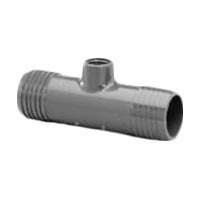
1402-210 Combo & Reducing Tee 1-1/2" x 1-1/2" x 3/4" PVC
Brand: PVC
Save 25%
Original Price
$13.60
Current Price
$10.20
SKU 1402210
Durable PVC combo and reducing tee engineered for poly pipe irrigation and water-distribution systems. The 1402-210 model provides two 1-1/2" insert/barbed connections and a 3/4" female-threaded branch, giving a reliable transition between insert pipe and threaded fittings.
- Size & connections: 1-1/2" insert x 1-1/2" insert x 3/4" FIPT — insert x insert x FIPT configuration for straightforward poly pipe installations.
- Material: Injection-molded PVC construction resists corrosion and common irrigation chemicals; typically supplied in industry-standard grey.
- Installation: Barbed insert ends accept 1-1/2" polyethylene tubing. Use stainless-steel or brass clamps over the barbs and tighten securely; pressure-test the connection before burying.
- Compatibility: Works with standard 1-1/2" poly pipe and 3/4" male pipe-threaded accessories, valves, or risers for easy system branching and repairs.
- Applications: Ideal for irrigation manifolds, lateral branch connections, repair and retrofit jobs where a threaded branch is required.
- Care & inspection: Periodically inspect clamps and threaded joints for wear; replace the fitting if cracked or stressed. Follow local plumbing codes for potable water use.
Compact and economical, the 1402-210 combo reducing tee is a common contractor staple for efficient poly-to-thread transitions. Keep clamps and thread sealant on hand for fast, leak‑resistant installations.